Or the art of determining a fair price
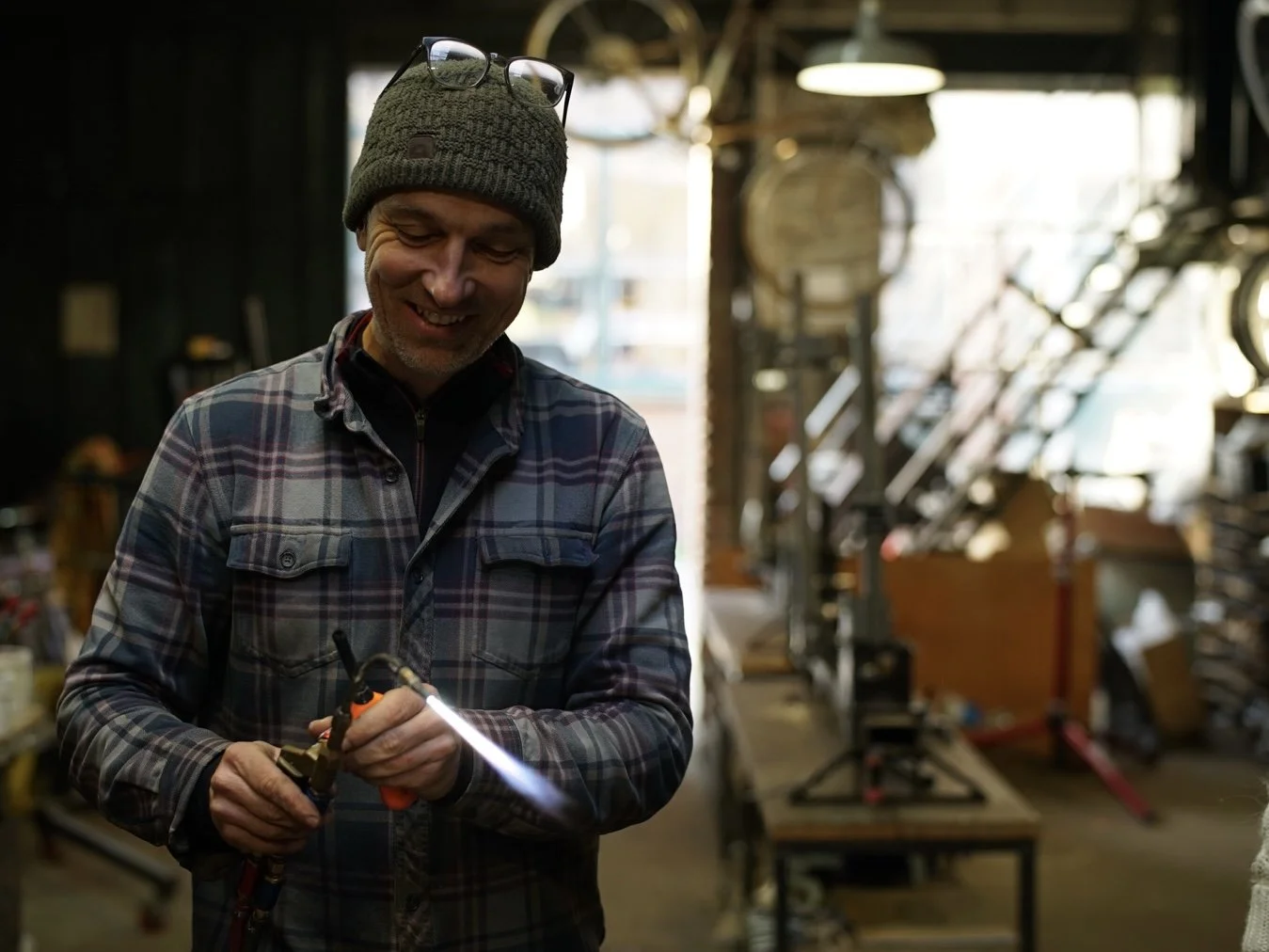
In 2023, the Association des Artisan du Cycles conducted a study on the economic health of the French artisan frame building industry. The study included more than half of the association's 60 members and revealed some surprising findings:
The average hourly rate is €50
The average price of an artisan frame kit (frame and fork) is €2,314
Price range: €733 to €4,000
The average complete artisan bicycle costs €4,767
To put this in perspective: high-end steel tubes, dropouts, and braze-ons cost between €200-€500 or more. Building a frame takes 20-40 hours excluding paint, a fork 5-10 hours, and a complete bike 100-150 hours. The numbers of the study don't add up. It seems that some builders are clearly underpricing their work relative to their stated hourly rates.
To compare, a high-end industrially manufactured frame kit can be around €4500.
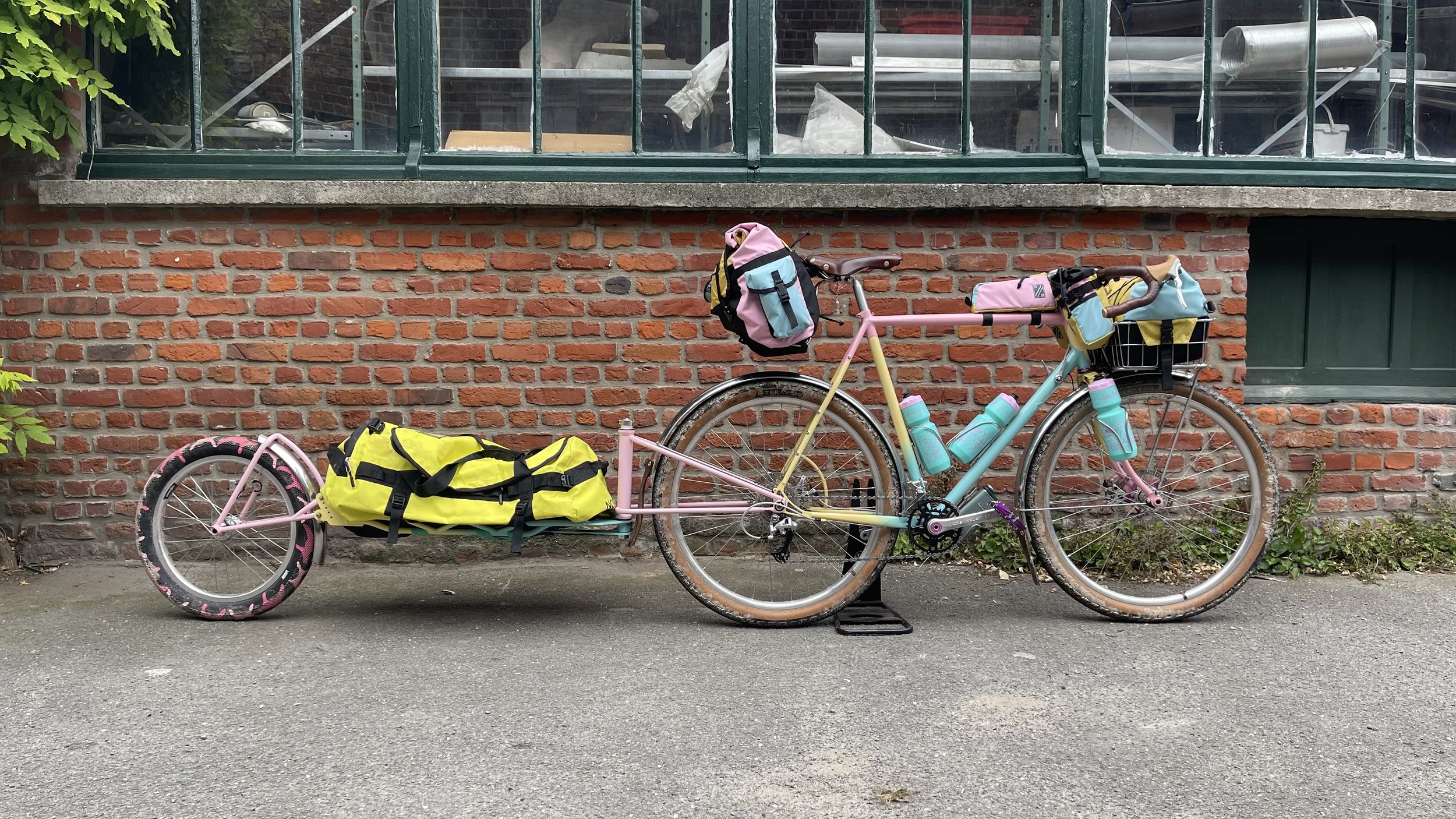
150 hours or more can easily be spent on creating a bespoke bicycle (not even couting the hours spent on a trailer)
While artisan frame building has deep roots in France, globalization and affordable motorized transport nearly killed the industry. Two-thirds of the study's participants had been in business less than five years - we're witnessing a revival, but one where many artisans struggle to price their work sustainably.
A Different Approach to Pricing
Not long after starting my business, I had a visit from a member of the faculty at EDHEC Business School - one of France's top five most expensive private business schools, ironically located in Roubaix, France's poorest city in 2024, where I'm also based.
After briefly discussing frame building and cycling, he proposed showing me strategies to maximize revenue and profits through growth and economies of scale. I had to tell him I wasn't interested. That approach requires creating products in large quantities, then convincing clients they need them - spending heavily on marketing and logistics, driving up prices unnecessarily. I prefer the opposite: creating a single product for a specific need, which reduces both costs and over-consumption.
The typical business school approach maximizes profit by pushing prices up until demand drops. My approach to pricing is similar to my business philosophy: it starts by asking what I actually need to earn to lead a decent life while minimizing impact on the environment and others' livelihoods.
Obviously this is subjective - it depends on your personal situation, family, location. But let me share concrete scenarios based on my actual business data to illustrate the logic.
Choosing Between Salary and Dividend
As a one-person SASU (société par actions simplifiée unipersonnelle) in France, I can pay myself either a monthly salary or an annual dividend, or both. The SASU structure was recommended when I started as the most flexible legal form to adapt as the business evolves.
When I started, I aimed for a modest €2,000 net per month - above minimum wage but not by much, enough to get by as a single father with three kids half the time. With massive inflation these past years, €2,500 net per month is now almost essential when living and working in the Lille metropolitan area. This roughly equals France's average net salary.
For this article, I'll focus on two equivalent scenarios:
Monthly net salary of €2,500
Annual dividend of €30,000 (scenario 1 annualized)
What hourly rates do these represent? What does this mean for product pricing?
How Many Hours Can I Actually Bill?
The calculation to reach my target hourly rate is straightforward: divide the annual profit margin I need by the number of hours I can work per year.
First, let's establish available working hours:
365 days per year
minus 104 weekend days
minus 25 days paid holiday (French standard)
minus 11 public holidays
equals 225 working days, or 1,800 hours at 8 hours per day
But I can't bill all those hours. I spend significant time on administration: accounting, VAT declarations, invoicing, dealing with the Greffe de Tribunal, updating the website and social media, and meeting with potential clients who don't result in orders. Assuming 25% of my time goes to this (probably more, honestly), I'm left with 1,350 billable hours per year.
What Are My Fixed Costs?
The minimum absolute annual profit margin my business needs in each scenario:
For monthly salary: 12 × (Net salary + employee social charges + employer social charges + income tax) + fixed operating expenses
For dividend: (Net dividend + 17.2% social charges + 12.8% income tax) ÷ 0.85 (accounting for 15% corporate income tax) + fixed operating expenses
According to URSSAF calculations:
€2,500 net/month = €3,454 gross for employee = €4,685 cost to company = €56,220/year
€30,000 net dividend = €42,857 gross = applying 15% corporate income tax = €50,420/year
My fixed operating expenses (everything I must pay regardless of sales):
Workshop rent: €4,200/year
Insurance: €2,000/year
Accountant and software: €3,000/year
Heating: €500/year
Internet/phone: €900/year
Website hosting: €500/year
Shows/exhibitions: €3,000/year
Prototyping/tests: €2,000/year
Bank fees and admin: €400/year
Tools/maintenance: €1,500/year (theoretically variable but hard to allocate)
Mobility: €4,200/year (insurance and costs for small delivery van)
CFE (local business tax): €800/year
Total fixed costs: €23,000/year
The Hourly Rate I Need
The total annual margin I need to create:
Salary scenario: €56,220 + €23,000 = €79,220
Dividend scenario: €50,420 + €23,000 = €73,420
Therefore, my required hourly rates:
Salary €2,500/month: €79,220 ÷ 1,350 hours = €58.68/hour
Dividend €30,000/year: €73,420 ÷ 1,350 hours = €54.38/hour
What Does This Mean for Frame Prices?
If I spend roughly 40 hours on a bike frame with €400 in materials (net of VAT), and I'm in the dividend scenario aiming for €30,000 annually (€2,500 disposable income per month), the frame price would ideally be around €2,500 before VAT or €3,000 including VAT. A frame kit including fork and paint would be close to €4,000 including VAT in that scenario, clearly above the average price indicated in the study mentioned above.
It is not easy to find clients at such a high price, especially in the current economic environment. Therefore, as an experienced frame builder, I create efficiencies by working on several frames simultaneously, leading to reductions to keep prices at a more competitive level. For 2026, I've updated my pricing to reflect this logic - you can find current prices on my website for frames, forks, accessories, paint, and frame building courses.
This is only the second full pricing review I've done in 10 years, so I felt it necessary to share the logic and create full transparency. The foundation of a small business like this is trust between client and artisan - trust in craftsmanship and in how business is conducted.
A Word on Taxes and Small Business
I could stop here, but with recent discussions about potentially increasing corporate tax rates for all businesses, I want to point out the substantial taxes and social charges already flowing from small operations like mine.
Consider my actual scenario (€30,000 dividend): working 1,350 hours at €54.38 net of VAT generates €14,850 in VAT for the public purse. Another €20,420 goes to social charges, income tax, and corporate tax. For every euro I earn, €1.18 goes to the government - from the very first euro.
How does this compare to large multinational enterprises? I can't say, but I suspect the ratio is more advantageous for them.
If we want a thriving economy with healthy small and medium-sized businesses - which are always the backbone of any economy - the fiscal system needs massive review. Letting small business owners live means more local, more durable production at more affordable prices.
Have a good start to 2026 and ride your bikes as much as possible!
